
Short answer… yes, especially in 2026.
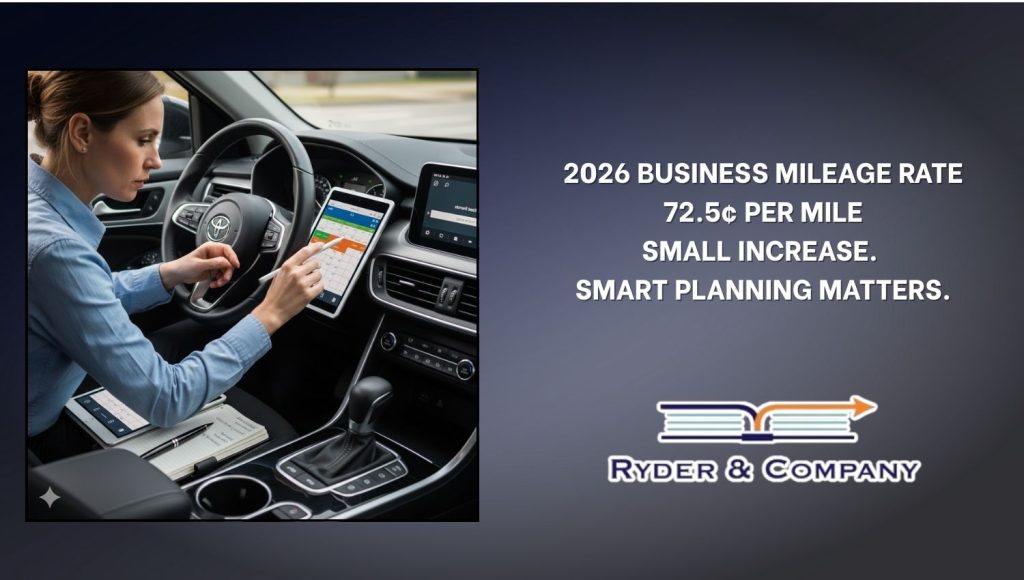
The IRS has officially increased the 2026 standard business mileage rate to 72.5 cents per mile, up 2.5 cents from 2025. While that change may seem modest at first glance, it can translate into real tax savings for business owners who rely on their vehicles and track mileage properly.
For small business owners, self-employed professionals, and independent contractors, mileage is often one of the most consistent deductions available and one of the easiest to underutilize. The 2026 update makes paying attention now more important than ever.
What is the 2026 IRS business mileage rate and why does it matter?
The 2026 IRS standard business mileage rate is 72.5 cents per mile, reflecting a 2.5-cent increase from 2025. This matters because each eligible business mile now generates a larger tax deduction, potentially reducing taxable income for business owners who track mileage accurately throughout the year.
What changed for 2026 and why the IRS adjusted the rate
Each year, the IRS evaluates the real-world costs of operating a vehicle. Fuel prices, maintenance, insurance, repairs, and depreciation all factor into the calculation. Based on those economic inputs, mileage rates are adjusted to better reflect what it actually costs to drive for business purposes.
For 2026, the IRS increased the business mileage rate, while other mileage categories saw little to no change.
| Mileage Type | 2025 Rate | 2026 Rate | Notes |
| Business use | 70¢ | 72.5¢ | Increased by 2.5¢ |
| Medical use | 22¢ | 21.5¢ | Slight decrease |
| Charitable use | 14¢ | 14¢ | Set by statute |
The headline takeaway is clear… business mileage is now more valuable per mile than it was last year.
To put that into perspective, a business that drives 10,000 qualifying miles in 2026 would see $250 more in deductions compared to 2025, without driving a single additional mile.
Why this matters beyond the math
Mileage deductions are often underestimated because driving feels routine. Client meetings, supply runs, job site visits, and sales calls tend to blend together over the course of the year. But those miles represent real operating costs, and the IRS allows you to deduct them for a reason.
With the higher 2026 mileage rate, consistent tracking becomes a strategic advantage, not just a recordkeeping task. Businesses that track mileage as it happens are far more likely to:
- Capture every legitimate deduction they are entitled to
- Avoid documentation issues during tax preparation
- Reduce stress and guesswork at year-end
As Ron Ryder, Owner of Ryder & Company, explains:
“Mileage rates change every year, but the biggest savings rarely come from the rate alone. They come from planning. Clients who track mileage consistently and review their approach early are always in a better position than those trying to reconstruct records after the fact.”
Standard mileage rate vs actual expenses in 2026
There is no universal answer to which method is better.
The standard mileage rate offers simplicity and predictability, which is why many small businesses prefer it. The actual expense method can sometimes produce higher deductions, particularly for newer vehicles or those with higher operating costs, but it requires more detailed documentation.
With the 2026 IRS mileage rate increasing to 72.5 cents per mile, the standard method becomes more attractive for many businesses. Still, the right choice depends on how the vehicle is used and how well records are maintained.
This is a decision worth reviewing early in the year, not after it ends.
Who benefits most from the 2026 mileage rate increase?
The higher mileage rate has the greatest impact on businesses that rely heavily on driving as part of their normal operations, including:
- Independent contractors and gig workers using personal vehicles
- Service-based businesses traveling to client locations
- Sales professionals covering multiple territories
- Business owners splitting time between offices, vendors, and job sites
For these businesses, the mileage deduction is often one of the largest recurring write-offs available and one of the easiest to mishandle when tracking slips.
Frequently Asked Questions
Can I choose between the standard mileage rate and actual expenses?
Yes. In many cases, you may choose each year, though certain restrictions apply depending on when the vehicle was first placed in service.
Does the 2026 mileage rate apply to electric or hybrid vehicles?
Yes. The standard mileage rate applies to gasoline, hybrid, and fully electric vehicles as long as the miles qualify as business use.
Who benefits most from the mileage rate increase?
Businesses with higher annual mileage and consistent tracking benefit the most, particularly those using the standard mileage method.
When should mileage tracking begin for 2026?
January 1, 2026. Waiting until later in the year often results in lost deductions or unreliable records.
A small increase that rewards smart planning
A 2.5-cent increase may not make headlines, but the 2026 IRS mileage rate rewards businesses that stay organized and proactive. When mileage is tracked accurately and reviewed strategically, the deduction can quietly deliver meaningful tax savings.
Now is the time to review how mileage is tracked, confirm whether your current method still makes sense, and put systems in place that work all year, not just at tax time.
The team at Ryder & Company helps clients think ahead, stay compliant, and make informed decisions that support long-term business success. Addressing mileage strategy early can make a measurable difference when it matters most.